Partial meniscectomy
The damaged meniscus tissue is trimmed away. Recovery is quick, usually two to six weeks.
Knee · Dr. Jason Jones
The meniscus is the knee's shock absorber, and it tears both in sport and with everyday wear. When a tear can be repaired, Dr. Jones will usually recommend repair: the recovery is longer, but the knee does much better in the long term.
At a glance
Treatment
The outer third of the meniscus has a rich blood supply. A tear in this red zone may heal on its own or can often be repaired. The inner two thirds has no blood supply, so tears in this white zone cannot heal and are usually trimmed away. Your age, activity level and any other injuries also shape the plan.
The damaged meniscus tissue is trimmed away. Recovery is quick, usually two to six weeks.
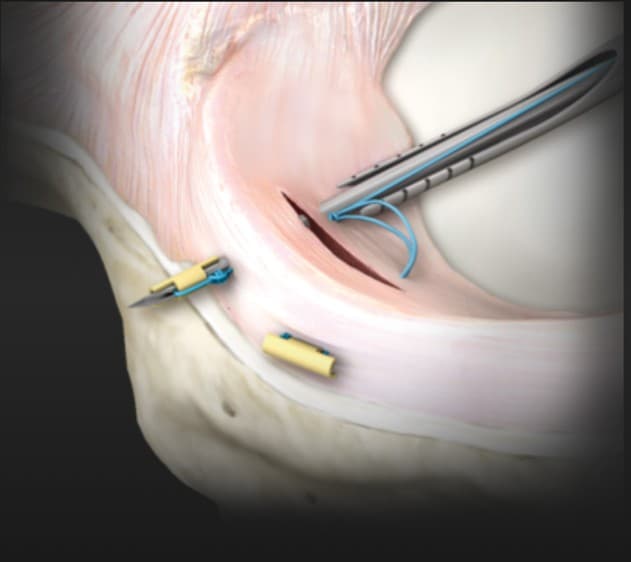
The torn pieces are stitched together, sometimes through extra 1 cm incisions for difficult tears. Repair restores the meniscus and its protection of the joint.
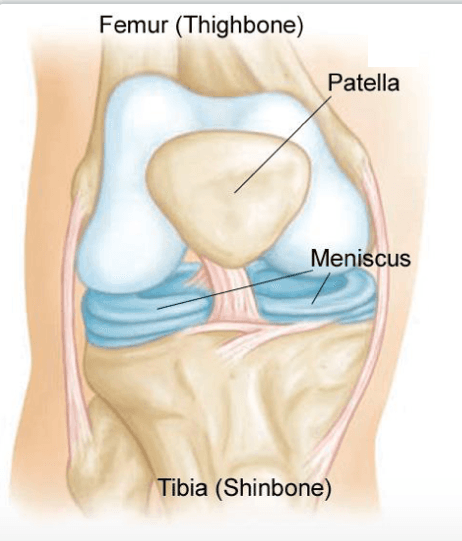
The meniscus is a wedge-shaped shock absorber between the thigh bone (femur) and the lower leg (tibia). It nourishes and protects the cartilage on the ends of those bones, and is important for the lifespan of your knee and pain-free function.
Tears are described by how they look and where they are. Common tears include bucket handle, flap and radial tears. Sports-related tears often happen with other injuries, such as ACL tears.
Sudden tears often happen in sport, when a player squats and twists the knee, sometimes with direct contact. Degenerative tears are more common with age: worn cartilage can tear with just an awkward twist getting up from a chair.
You might feel a pop when it tears. Most people can still walk, and many athletes keep playing. Over two to three days the knee becomes stiffer and more swollen. The most common symptoms are:
If a torn meniscus is suspected, an MRI is ordered to look at the meniscus and the knee cartilage. See a specialist if knee pain lasts longer than three weeks, or if the knee swells.
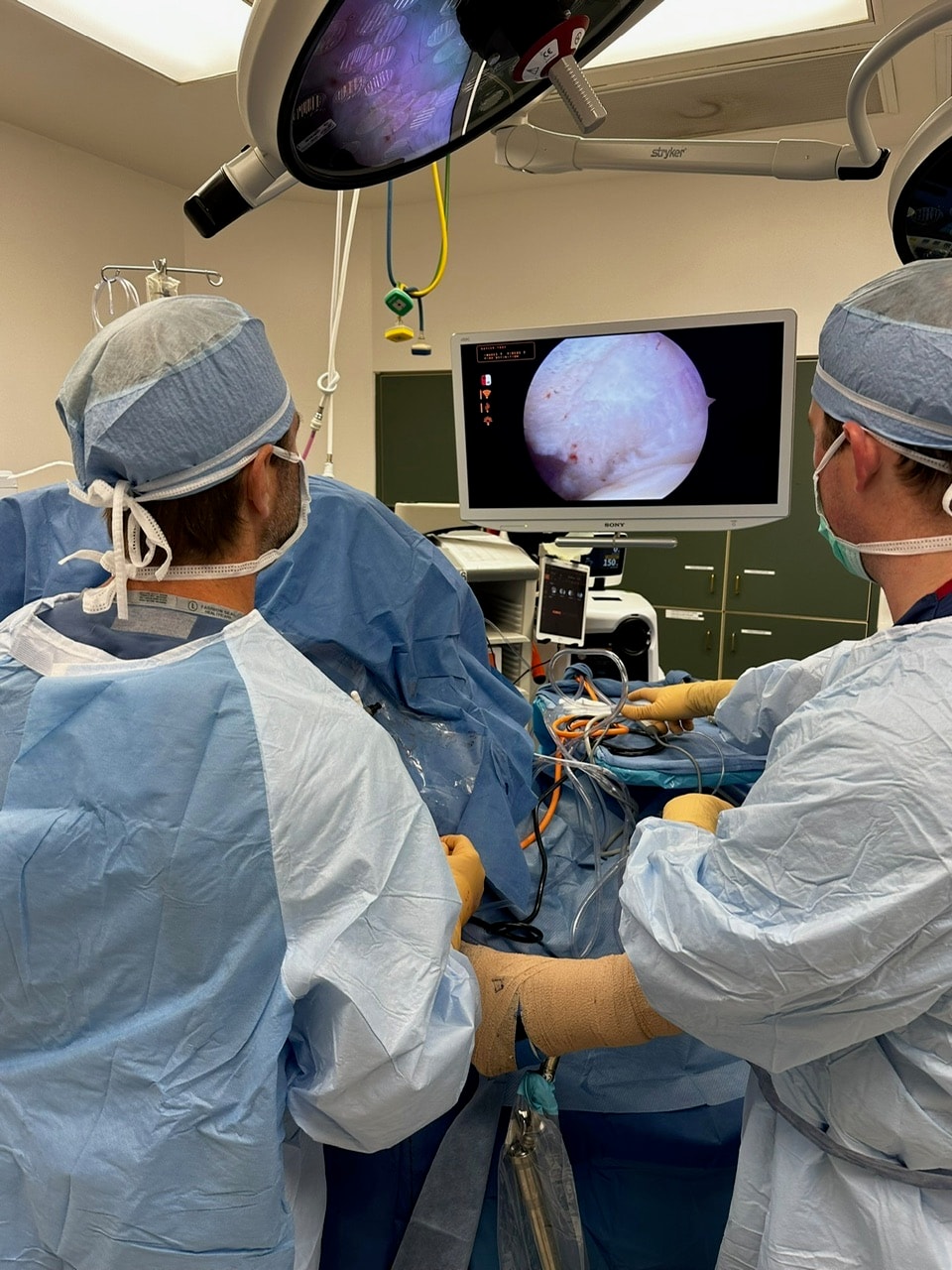
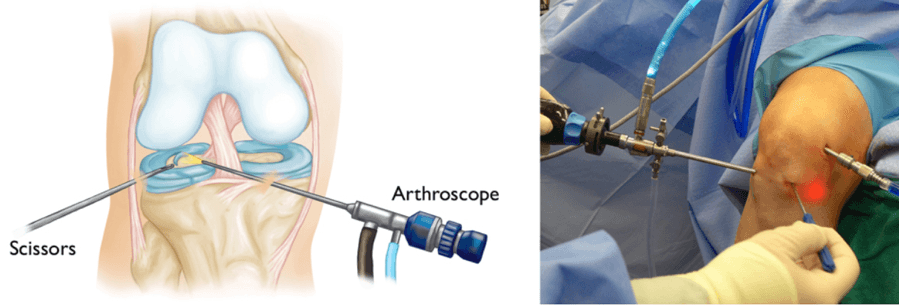
Both are done arthroscopically. A miniature camera goes in through a small incision (portal) and gives a clear view of the inside of the knee. Miniature surgical instruments go in through other portals to trim or repair the tear.
Active people with sudden tears tend to have healthy joints, and repairing the meniscus is important for their long-term outcome. Healing rates are very high, especially when surgery happens before the tissue is badly damaged. Degenerative tears are harder to repair, but in some cases repair can still prolong the life of the joint.
In general, if a meniscus can be repaired, Dr. Jones will suggest repair. The recovery is harder and there is a small chance the meniscus may not heal, but the long-term outcomes are much better.
Because the meniscus must heal back together, recovery from a repair is much longer than from trimming, and very different.
A tear of the meniscus attachment at the back of the knee is common with arthritis, and can lead to quickly advancing arthritis and loss of function. If the cartilage in that part of the joint is good and the meniscus tissue is relatively healthy, the root can be repaired. Recovery is the same as for any meniscus repair, and long-term outcomes improve if it heals.
Often the cartilage simply weakens with age and tears with little or no injury. In other cases a twisting injury causes it.
Trimming a torn meniscus generally takes around 30 minutes. Repairs take longer.
No. Meniscus surgery is an outpatient procedure.
After trimming, most patients rehabilitate at home, or attend therapy for around three weeks. Repairs need a longer, supervised program.
About a week after trimming, and longer if your work involves heavy lifting, heights, running or jumping.
Your surgeon
MD
Dr. Jones is a fellowship-trained sports medicine surgeon specializing in the knee and shoulder. He has performed several thousand knee and shoulder procedures, focused on joint preservation and minimally invasive surgery.

Before your visit
Also in Knee
We call you back within one business day.
Request an appointmentRather talk it through?
Call (615) 329-2520