Microfracture
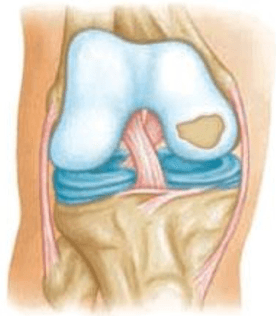
For small defects from an injury, the damaged cartilage is removed and small holes are made in the exposed bone to bring in a new blood supply. Weight must be kept off the leg while the surface heals.
Knee · Dr. Jason Jones
Some knees are better helped to heal than operated on. Dr. Jones uses cartilage restoration and regenerative injections to repair damage early, and to delay or prevent arthritis.
At a glance
Cartilage restoration
Articular cartilage is the smooth tissue covering the ends of bones, letting them glide with very little friction. When it is damaged by injury or wear, the joint surface is no longer smooth, movement hurts, and arthritis can follow. Restoring it can relieve pain, improve function and, most importantly, delay or prevent arthritis.
For small defects from an injury, the damaged cartilage is removed and small holes are made in the exposed bone to bring in a new blood supply. Weight must be kept off the leg while the surface heals.
Healthy cartilage and bone is moved from a non-weight-bearing part of the knee to the damaged area, arthroscopically. It is used for smaller defects, generally under 1 cm, and reliably improves function and relieves pain.
When a defect is too large for an autograft, a block of donor cartilage and bone is shaped to fit the exact contour of the defect and press fit into place, through an open incision.
Healthy cartilage is taken, minced and usually mixed with BMAC, then placed into small to medium defects in a single procedure. No bone is taken, so there is less damage to the rest of the joint.
Juvenile donor cells, ten times as dense as adult cartilage. Nothing is taken from your knee.
Cartilage damage often comes with meniscus or ligament tears, and it doesn't show on an X-ray. The best candidates are young adults with a single lesion. Older patients, or those with many lesions in one joint, are less likely to benefit. The knee is the most common site; ankle and shoulder problems can also be treated.
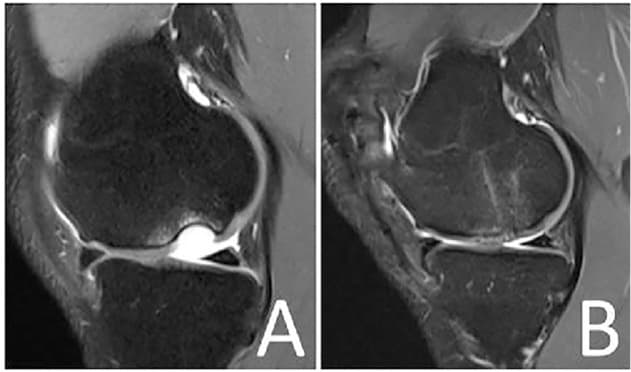
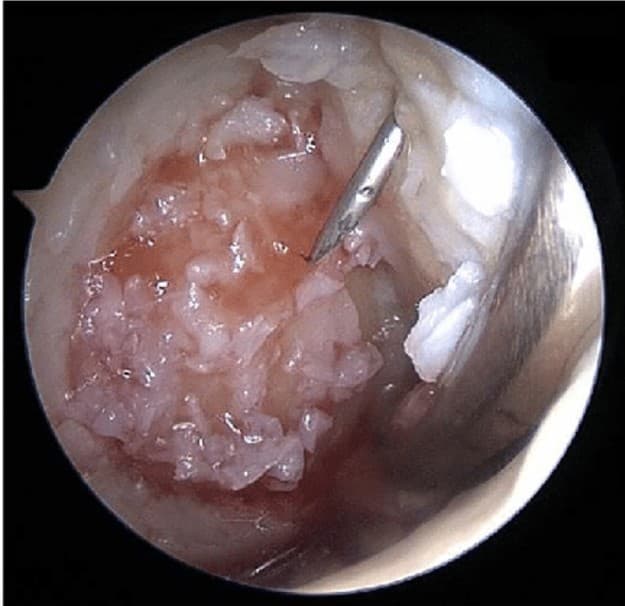
Minced cartilage implantation transplants fragments of your own cartilage in a single-step procedure. It can be used for small and large cartilage lesions, and for lesions that reach the bone beneath. For small to medium defects with healthy underlying bone, it is an easy and effective option.
The joint surface is protected while it heals. For the knee or ankle that usually means crutches for the first few weeks. Physical therapy starts quickly and typically lasts two to three months.
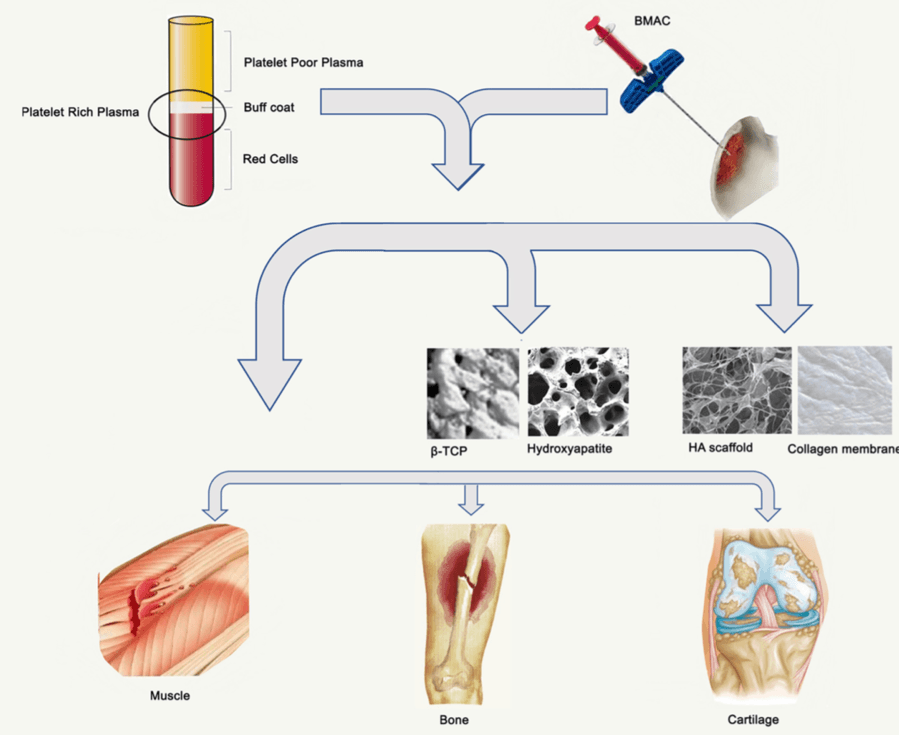
Platelets are best known for clotting blood, but they also carry hundreds of growth factors that are important in healing. PRP is plasma with five to ten times the usual concentration of platelets, made by drawing your blood and concentrating it in a centrifuge.
PRP can be injected into an injured area, such as an inflamed tendon, or used during surgery to help some repairs heal. After an injection, pain at the site may increase for a week or two, and it can be several weeks before you feel the benefit.
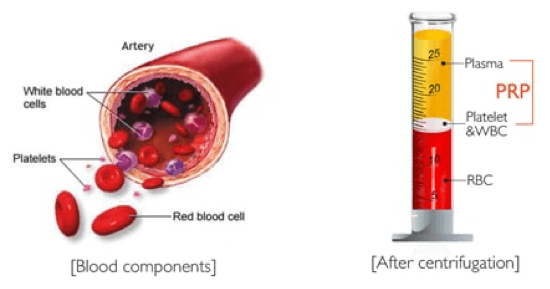
The evidence is strongest for chronic tendon injuries, especially tennis elbow. Results for other tendon problems and for knee arthritis are promising but not yet conclusive, and studies show little benefit when PRP is added to rotator cuff or ACL surgery. The risks are minimal: some increased pain at the injection site, with other problems no more common than with a cortisone injection.
Few insurance plans, including workers' compensation, cover PRP. Check your eligibility with your insurer before treatment.
BMAC uses cells from your own bone marrow to start healing in conditions including osteoarthritis and cartilage injuries. Chronically painful areas often lack the blood supply and regenerative cells to repair themselves, and BMAC delivers a concentrated supply of them.
A small amount of marrow is taken from the back of the pelvis under local anesthesia, concentrated in a centrifuge, and injected into the damaged tissue. Downtime is minimal, with two or three days of soreness. Avoid anti-inflammatories such as ibuprofen, naproxen and aspirin for at least two weeks, since they can interrupt healing. A short course of physical therapy follows, and the full benefit is usually felt within six to eight weeks.
Early studies in the knee are promising and show no adverse events beyond temporary swelling, but the number of trials is small and more long-term research is needed.
Your surgeon
MD
Dr. Jones is a fellowship-trained sports medicine surgeon specializing in the knee and shoulder. He has performed several thousand knee and shoulder procedures, focused on joint preservation and minimally invasive surgery.

Before your visit
Also in Knee
We call you back within one business day.
Request an appointmentRather talk it through?
Call (615) 329-2520