Pain that limits your day
Severe knee pain or stiffness that limits everyday activities, including walking, climbing stairs, and getting in and out of chairs. You may find it hard to walk more than a few blocks without significant pain.
Knee · Dr. Jason Jones
When arthritis or injury makes walking, stairs or even rest painful, and other treatments have stopped working, knee replacement relieves the pain and corrects deformity. More than 90% of patients have a dramatic reduction in knee pain.
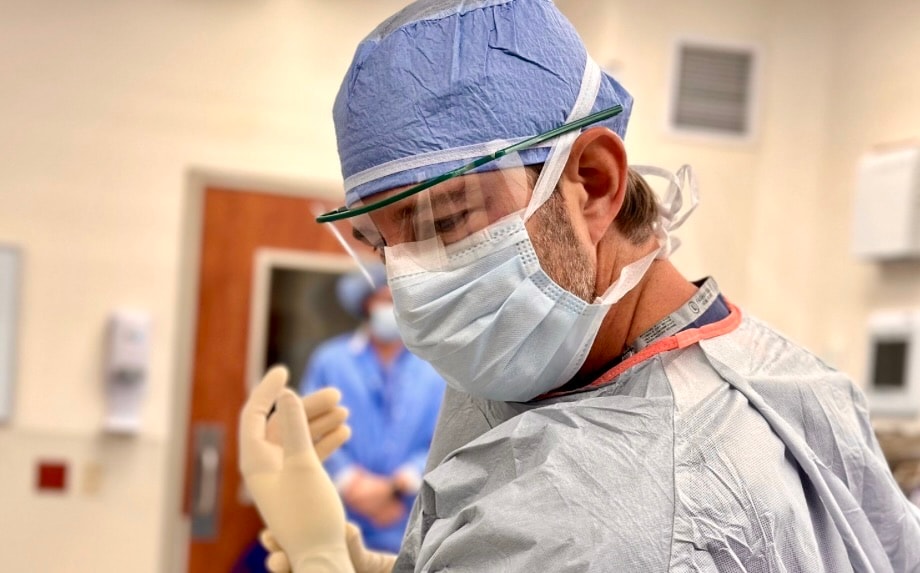
At a glance
Is it time?
The decision should be a cooperative one between you, your family, your family doctor and your orthopaedic surgeon. Reasons to consider it include:
Severe knee pain or stiffness that limits everyday activities, including walking, climbing stairs, and getting in and out of chairs. You may find it hard to walk more than a few blocks without significant pain.
Moderate or severe knee pain while resting, day or night.
Chronic knee inflammation and swelling that does not improve with rest or medications.
A bowing in or out of your knee.
No substantial improvement with anti-inflammatory medications, cortisone or lubricating injections, physical therapy, or other surgeries.
Arthritis is a slowly progressive disease of the cartilage of your joints. Osteoarthritis is the most common form: the joint cartilage gradually wears away, most often in middle-aged and older people. Rheumatoid arthritis is an inflammatory type that can destroy cartilage at any age. Post-traumatic arthritis can develop years after a fracture, ligament injury or meniscus tear.
Common symptoms are a stiff, swollen joint, pain that comes on gradually or suddenly, pain that is worse in the morning or after rest, and a feeling of catching or locking.
There are many options available to you once arthritis starts to set in. If your body does not respond to non-surgical treatments, surgery may be necessary.
Come in for an evaluation to see which option is right for you.
There are no absolute age or weight restrictions. Most patients are between 50 and 80. Body weight can affect how hard rehabilitation is and your long-term result.
A knee replacement replaces the surfaces of the damaged bone. There are four basic steps.
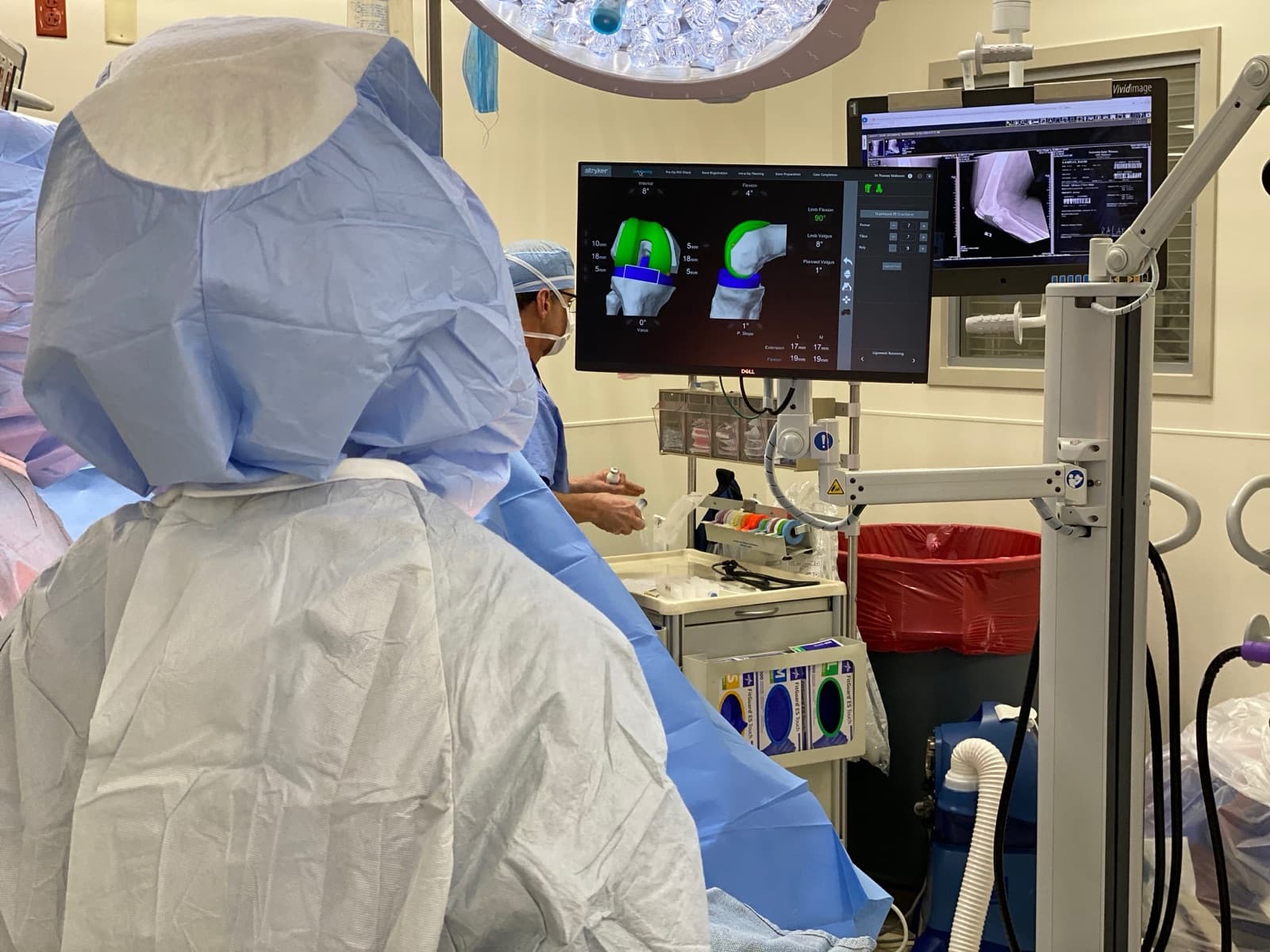
The knee has three compartments: the medial (inside), the lateral (outside), and the patellofemoral (the front, between the kneecap and thighbone). When osteoarthritis is limited to one of them, only that compartment is replaced with metal and plastic. The healthy cartilage and bone in the rest of the knee is left alone.
Partial knee replacement has been performed in patients of all ages, but is more commonly done in patients younger than 60 or older than 75.
Multiple studies show partial knees perform excellently in the right patient, and one can feel more natural because most of your own knee is kept. Compared with a total knee replacement, the advantages include:
The trade-offs are a possibly shorter lifespan for the implant, and the chance that arthritis progresses to another part of the knee and causes pain.
Knee replacement will not let you do more than you could before you developed arthritis. Every implant slowly wears in its plastic spacer with normal use, and excessive activity or weight can speed that up.
Realistic activities include unlimited walking, swimming, golf, driving, light hiking, biking, ballroom dancing and other low-impact sports. There are no strict limits after surgery, and many patients have gone back to more strenuous activities.
Your surgeon
MD
Dr. Jones is a fellowship-trained sports medicine surgeon specializing in the knee and shoulder. He has performed several thousand knee and shoulder procedures, focused on joint preservation and minimally invasive surgery.

Before your visit
Also in Knee
We call you back within one business day.
Request an appointmentRather talk it through?
Call (615) 329-2520