Unprecedented precision
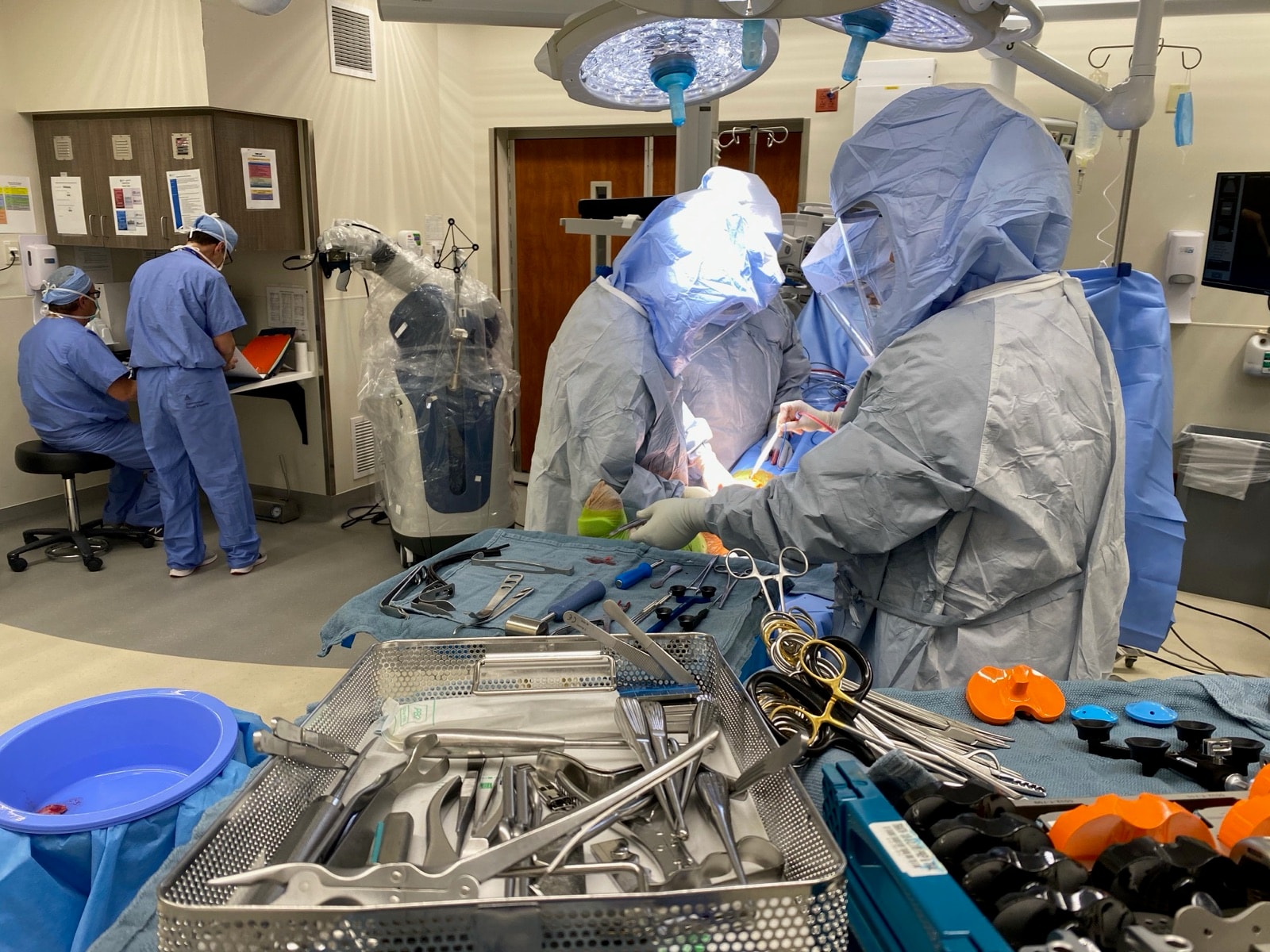
Mako lets Dr. Jones execute his surgical plan with unprecedented precision.
Knee · Dr. Jason Jones
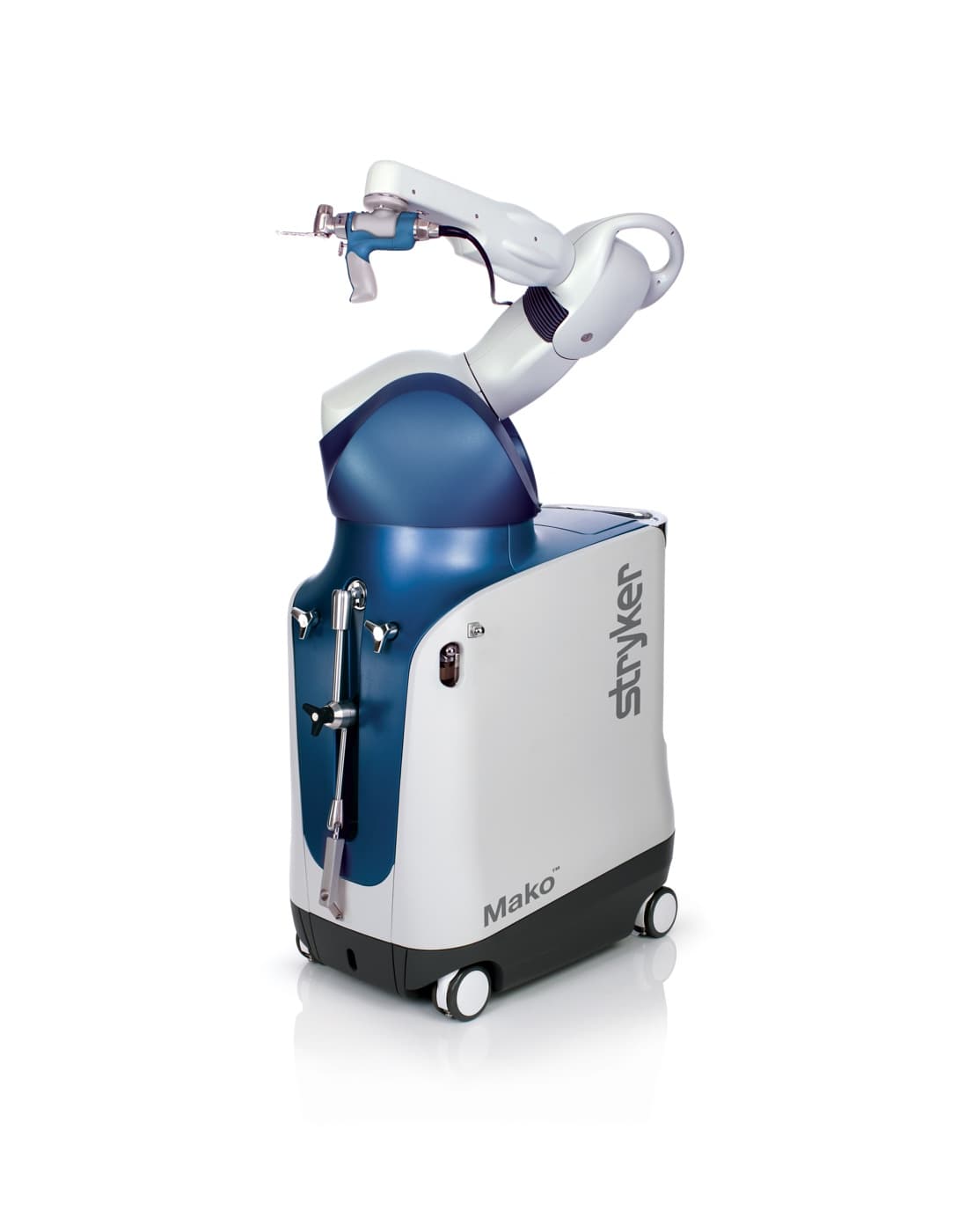
Mako SmartRobotics lets Dr. Jones plan your knee replacement from a 3D CT scan of your own knee, then carry out that plan with robotic-arm precision. In clinical studies, Mako patients had less pain in the days and weeks after surgery than patients with a conventional knee replacement.
At a glance
The technology
Dr. Jones is one of a select group of surgeons in the US performing robotic-arm assisted knee replacement with Mako SmartRobotics.
Mako lets Dr. Jones execute his surgical plan with unprecedented precision.
The robotic arm helps protect and maximize healthy bone.
Soft tissue and ligaments are protected from damage.
In clinical studies, Mako patients had less pain in the days and weeks after surgery than patients with a conventional knee replacement.
Mako gets you back to the things you love, quicker.
Before surgery, 3D CT-based planning software lets Dr. Jones build a surgical plan customized to the anatomy of your knee.
During surgery, the robotic arm helps him carry out that plan accurately.
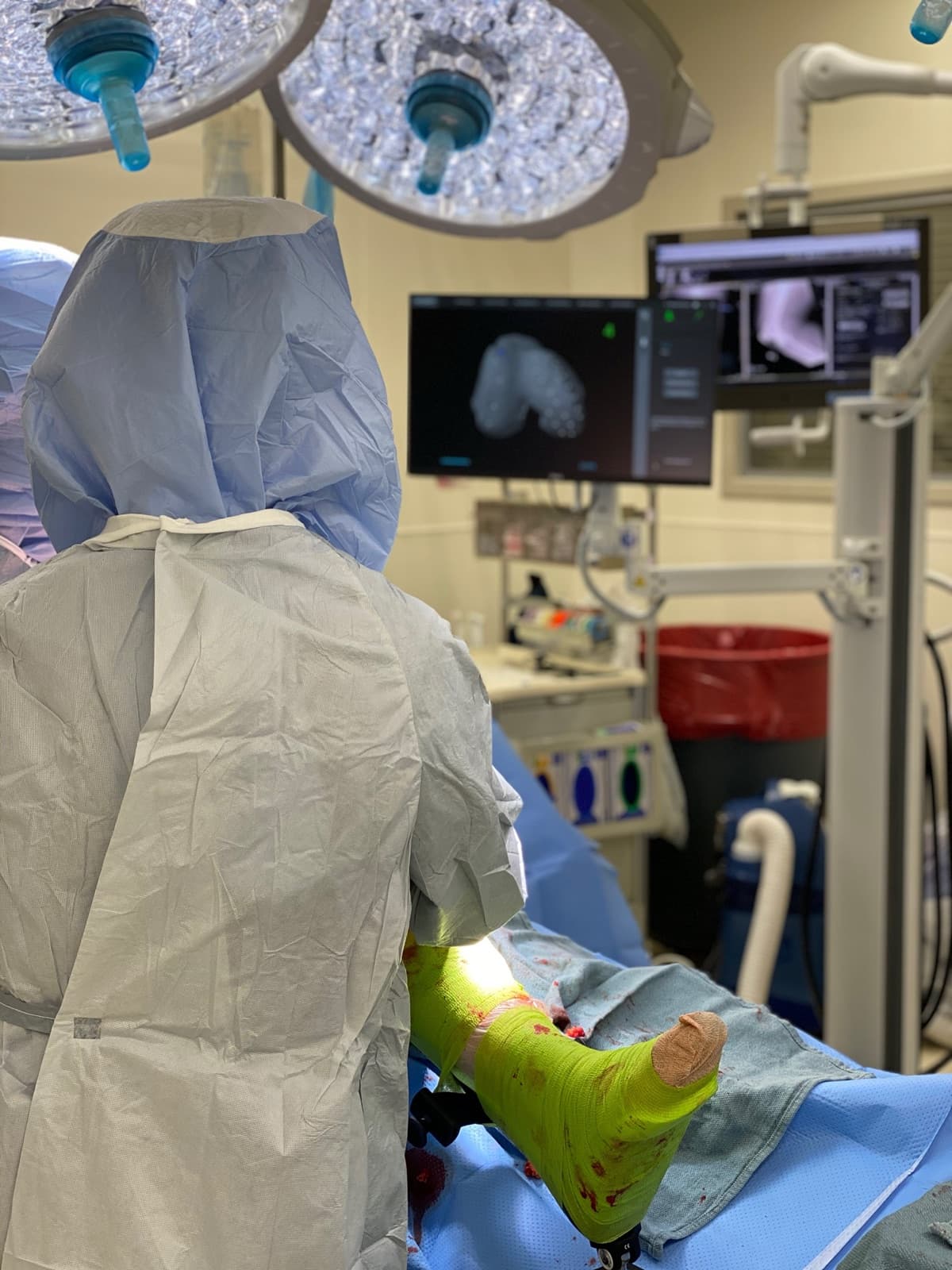
Mako is used for total knee replacement, which has four basic steps.
Who it suits and what to expect afterwards are the same as for any knee replacement. Mako changes how precisely the plan is carried out.
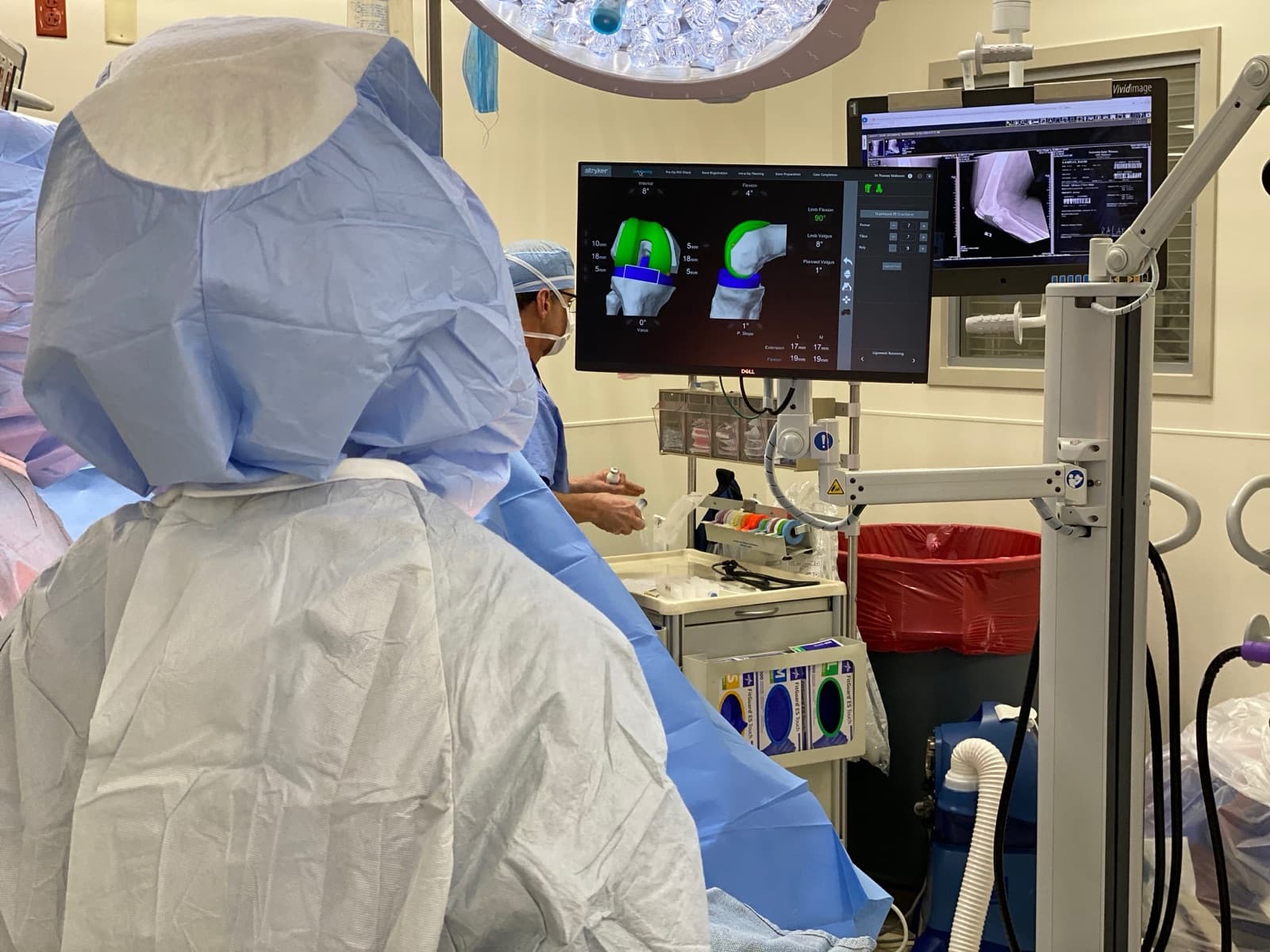
Mako is also used for partial (uni-compartmental) knee replacement. When osteoarthritis is limited to one part of the knee, only the damaged compartment is replaced with metal and plastic, and the healthy cartilage and bone in the rest of the knee is left alone.
In the right patient, a partial knee can feel more natural because most of your own knee is kept. Compared with a total knee replacement, the advantages include:
The trade-offs are a possibly shorter lifespan for the implant, and the chance that arthritis progresses to another part of the knee and causes pain.
The decision to have knee replacement is made first, between you, your family, your doctors and Dr. Jones. Once knee replacement is your best option, many patients qualify for Mako. Dr. Jones will tell you at your consultation whether it is right for your knee.
Your surgeon
MD
Dr. Jones is a fellowship-trained sports medicine surgeon specializing in the knee and shoulder. He has performed several thousand knee and shoulder procedures, focused on joint preservation and minimally invasive surgery.

Before your visit
Also in Knee
We call you back within one business day.
Request an appointmentRather talk it through?
Call (615) 329-2520