Shoulder · Dr. Jason Jones

Shoulder dislocation, instability and labral tears

A dislocated shoulder pops out of place and has to be put back, and the ligaments torn on the way out rarely heal by themselves. Repairing the labrum and ligaments restores stability so the shoulder stops slipping.

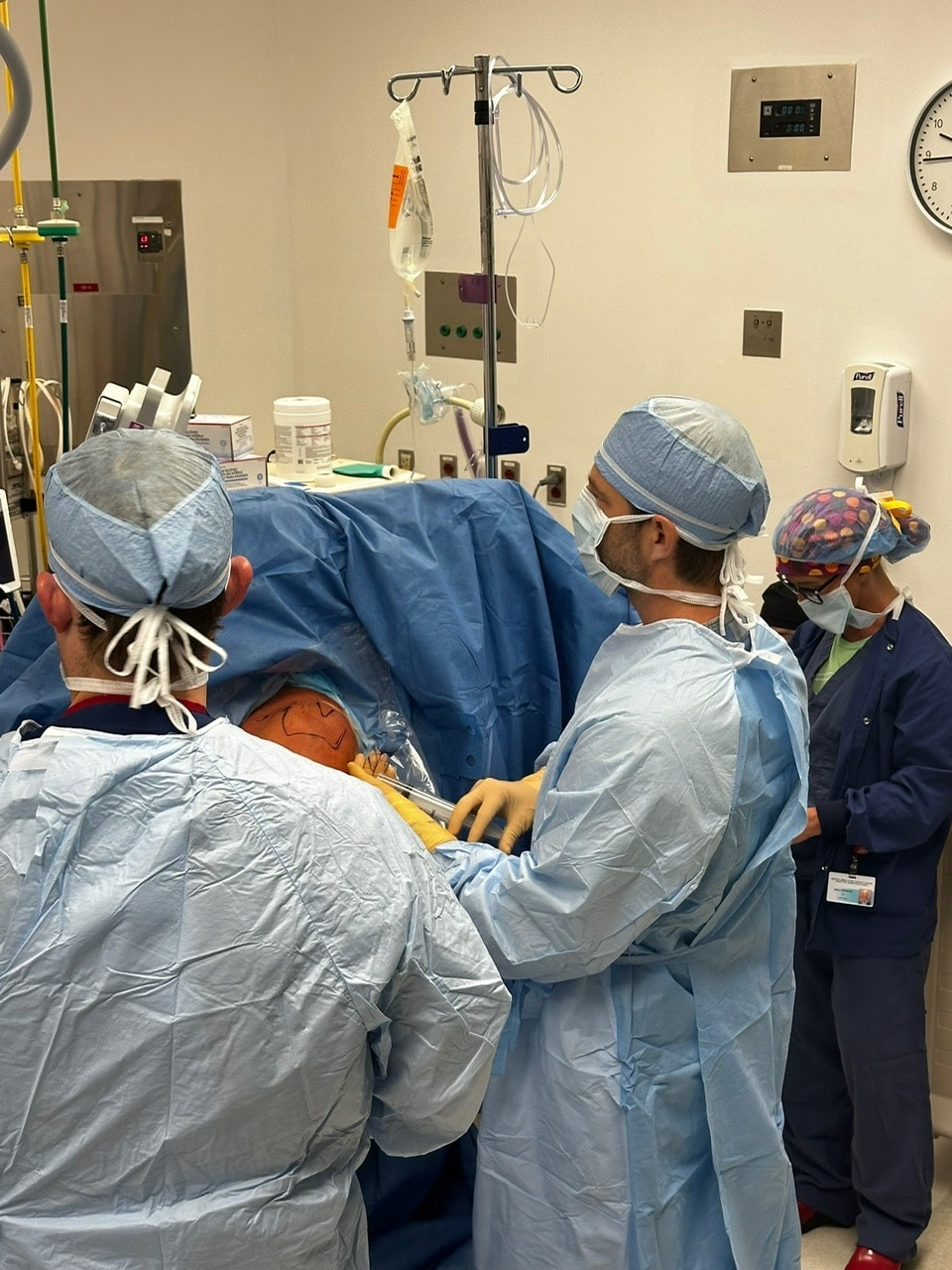
Dr. Jason Jones operating on a shoulder with his surgical team

At a glance

Hospital stay
Outpatient
Surgery
60 to 90 minutes
Sling
About a month
Sport
4 to 6 months

Dislocation and subluxation

Most dislocations happen when the arm is rotated above and away from the body, tearing the ligaments that hold the ball and socket together. After the shoulder is back in place much of the pain improves immediately. Sometimes the diagnosis is less obvious: the shoulder can slip part of the way out without fully dislocating, called subluxation.

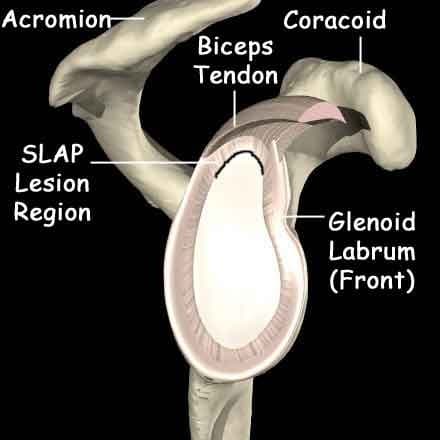
The labrum is a ring around the socket, like the washer on the end of a hose. It deepens the socket and anchors the ligaments and tendons that hold the joint together. Instability happens when those ligaments are stretched or torn, or the labrum is detached from the socket.

Diagram of the shoulder socket seen from the side, labeling the acromion, the coracoid, the biceps tendon, the glenoid labrum around the front of the socket, and the SLAP lesion region at the top where the biceps tendon attaches

Bankart repair for shoulder instability

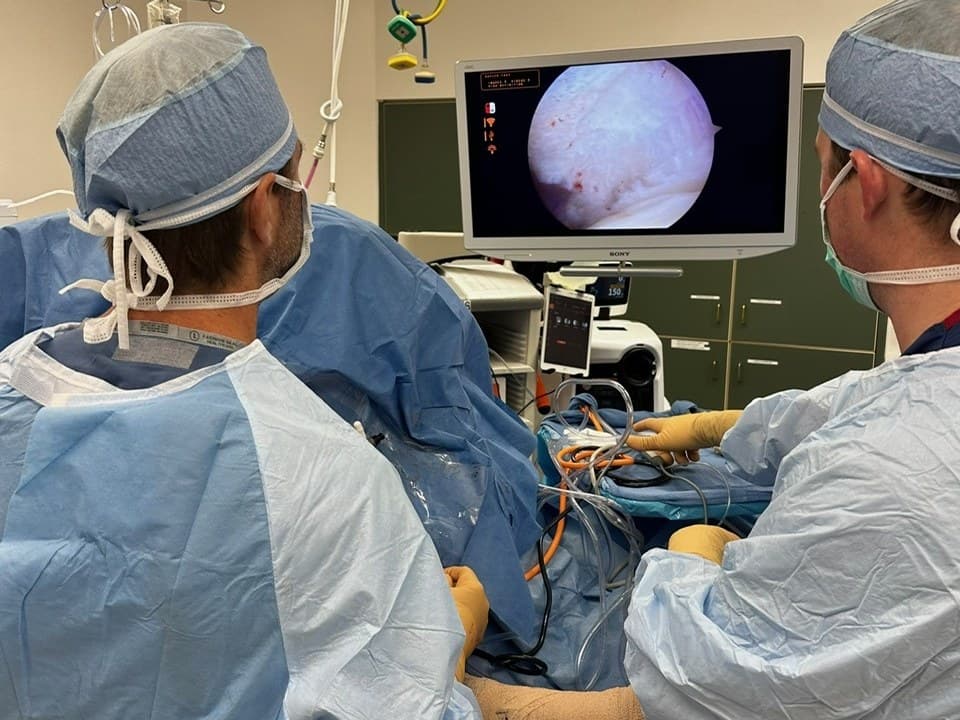
The repair is usually done arthroscopically, through small incisions (portals) with a camera. Suture anchors are placed in the bone of the socket, and sutures through the labrum reattach it to the bone. Tears in the surrounding capsule are repaired at the same time.

Whether it is done arthroscopically or through a small open incision depends on the severity of the tear and your activities.

Dr. Jason Jones and his surgical team during an arthroscopic procedure, with the joint on the monitor

Open repair for contact athletes

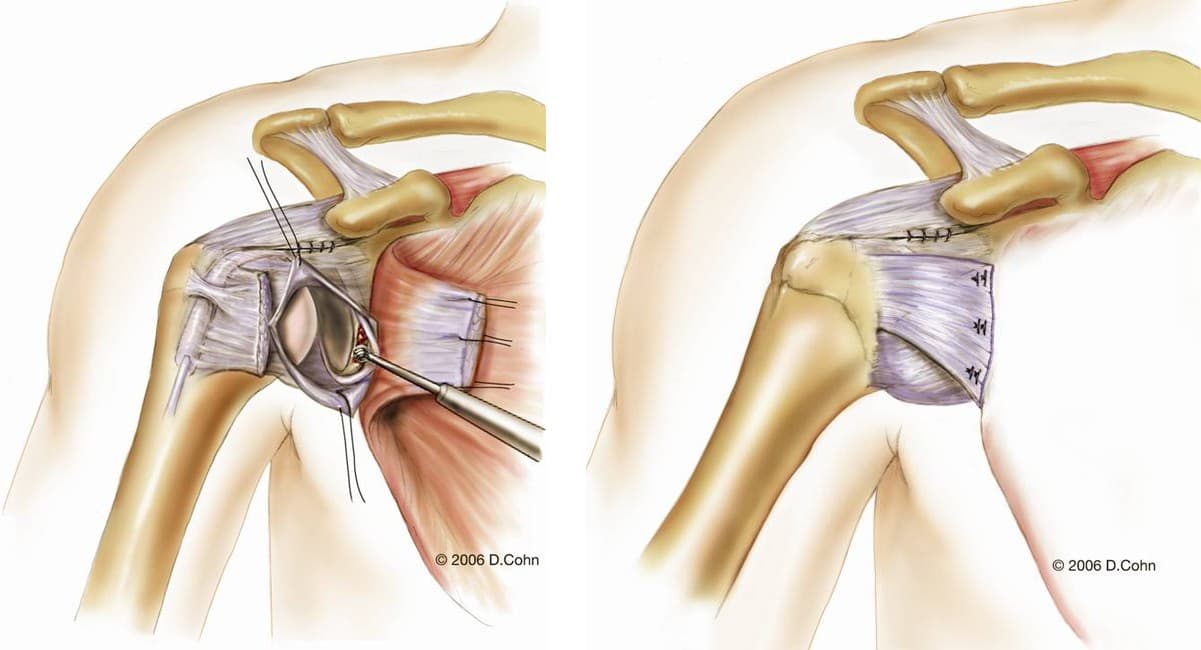
Football players and other contact athletes usually have an open repair. The labrum and the capsule are repaired through a small incision instead of through portals.

Two illustrations of an open shoulder repair. Left, the front of the joint capsule is opened to show the socket, with sutures in place and a burr at the front rim of the socket. Right, the capsule closed again with rows of stitches

SLAP repair

Tears of the top part of the labrum are called SLAP lesions (superior labrum, anterior and posterior). They are reattached to the socket arthroscopically with suture anchors, in the same way as a Bankart repair.

Recovery

Dislocation surgery is an outpatient procedure, and recovery runs in stages over four to six months.

Gentle movement prevents scar tissue from forming while early healing occurs, so during the first month in the sling you do simple motion exercises at home.

  1. Surgery dayAn outpatient operation of 60 to 90 minutes, often under a nerve block with light twilight sedation.
  2. 48 hoursThe bandage comes off, and you may shower.
  3. Two weeksThe earliest return to work. Heavy lifting takes several months.
  4. One monthThe sling comes off and physical therapy begins, on a regular basis for two to four months.
  5. Six weeksMost normal activities, apart from heavy lifting and sport.
  6. Four to six monthsReturn to sport, and throwing begins.
  7. Several weeks laterThrowing at full speed.

Questions and answers

How long does the procedure last?

Generally between 60 and 90 minutes.

Will I have general anesthesia?

Not necessarily. Many patients have a nerve block with light twilight sedation instead, which markedly reduces the risks of surgery.

Will I stay in the hospital overnight?

No. Dislocation surgery is an outpatient procedure.

What is the aftercare?

The bandage comes off 48 hours after surgery, and then you may shower. You'll be in a sling for a month, doing simple motion exercises at home to prevent scar tissue.

How long is physical therapy?

Regular therapy for two to four months, starting one month after surgery.

How long will I be out of work?

At least two weeks, and several months if your work involves heavy lifting.

When can I return to normal activities and sport?

Most normal activities at about six weeks, apart from heavy lifting and sport. Sport generally takes four to six months. Throwing usually starts at four to six months, with full-speed throwing several weeks later.

Your surgeon

Dr. Jason Jones

MD

Dr. Jones is a fellowship-trained sports medicine surgeon specializing in the knee and shoulder. He has performed several thousand knee and shoulder procedures, focused on joint preservation and minimally invasive surgery.

  • Fellowship, Lenox Hill Hospital, New York
  • Assistant team physician, New York Jets and New York Islanders
  • Complex shoulder training in Nice, France, with Pascal Boileau
  • Chairman of Orthopedics, Saint Thomas Hospital

Dr. Jason Jones smiling, arms folded, in his office

Talk to Dr. Jones about your shoulder.

Request an appointment