Pain reaching overhead
The pain generally starts at the outside of the shoulder.
Shoulder · Dr. Jason Jones
Rotator cuff tears cause pain reaching overhead and at night, starting at the outside of the shoulder and running down the upper arm. If the pain hasn't gone after three to four weeks, have a specialist look at it: early treatment can prevent some tears.
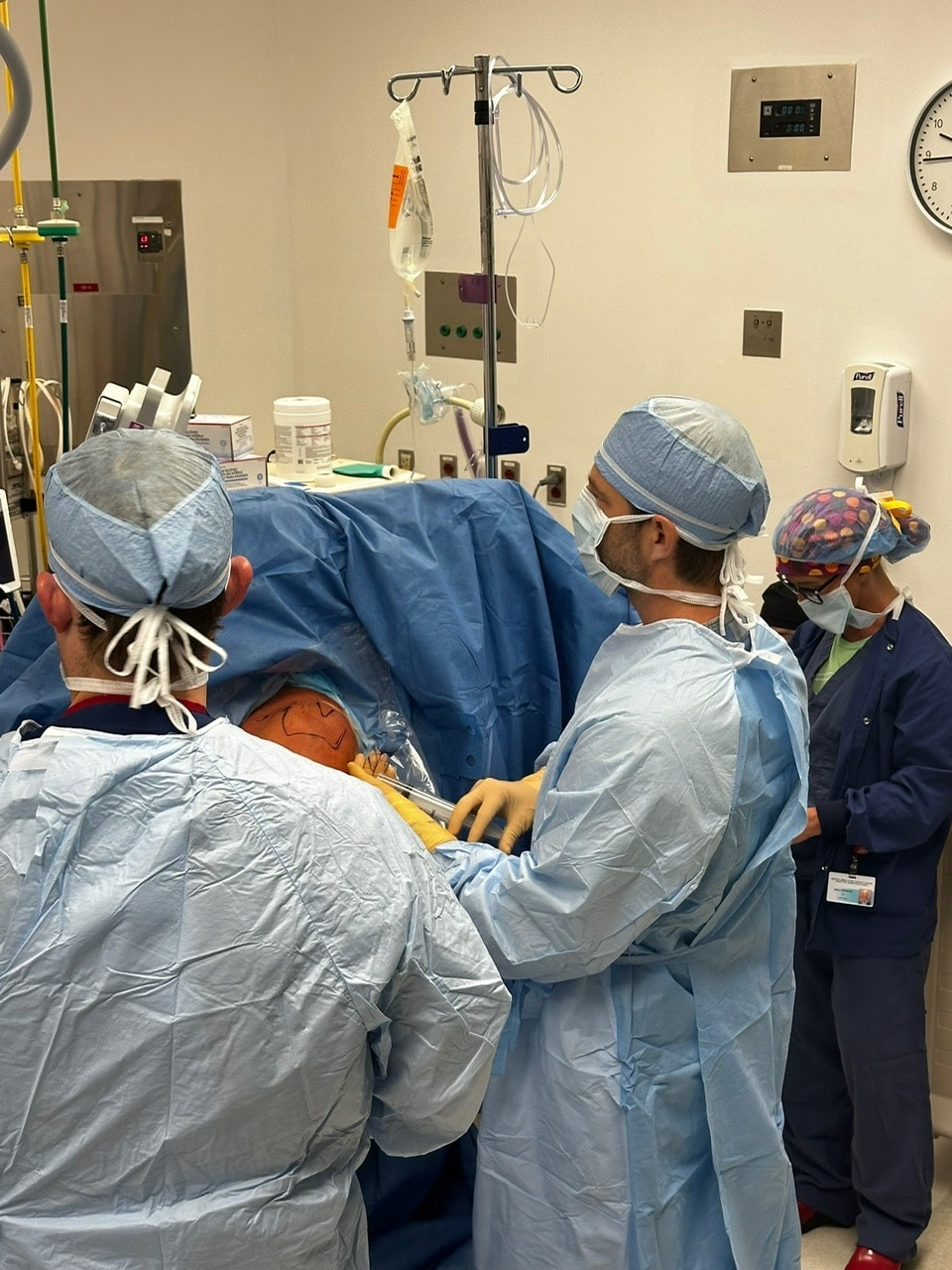
The evidence
Signs of a tear
The pain generally starts at the outside of the shoulder.
Rotator cuff tears also cause pain at night.
It radiates down the outside of the upper arm toward the elbow.
Along with the pain, the shoulder can lose strength and motion.
Early treatment can prevent some tears.
Most people have a bone spur under the acromion, the roof of the shoulder, that rubs a hole in the rotator cuff over time. Only a small percentage tear their rotator cuff in a sudden injury. Some people are born with these spurs, and they get bigger with age.
Spurs can usually be seen on properly positioned X-rays. Removing them before the rotator cuff tears can prevent the need for a much more involved operation later.
The surgery is done through small incisions (portals) with a camera. The inflamed bursa is removed and bone is shaved from the underside of the acromion to make room for the tendons. The torn edge of the cuff is cleaned back to healthy tissue, then pulled back into position and reattached to the humeral head with suture anchors.
For partial tears, if less than half the tendon is torn, the frayed edges are shaved smooth. If more than half is torn, it is usually repaired.
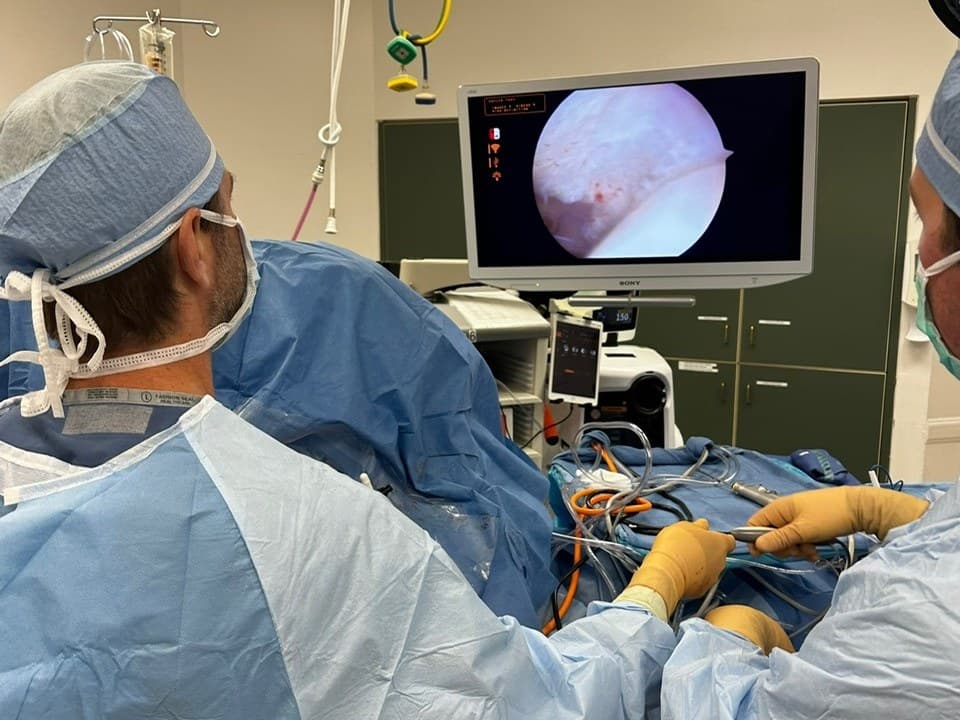
Impingement happens when the rotator cuff tendons rub on a bone spur under the acromion, and chronic rubbing can weaken and tear them. In a subacromial decompression the inflamed bursa is removed and the acromion is flattened so it no longer rubs on the cuff. Without a tear, it takes about 30 minutes, and the sling is needed for only a couple of days.
Arthritis at the end of the collarbone is a common cause of pain on the top of the shoulder. The cartilage between the collarbone and the acromion wears away, the bones grind, and spurs from the arthritis can damage the shoulder tendons too.
Arthroscopically, the spurs are removed and about 3/8 of an inch of bone is taken from the end of the collarbone. The gap fills with scar tissue, so the bones no longer rub. Expect a sling for two to three days. Physical therapy may be needed if the shoulder stiffens, and full recovery generally takes four months.
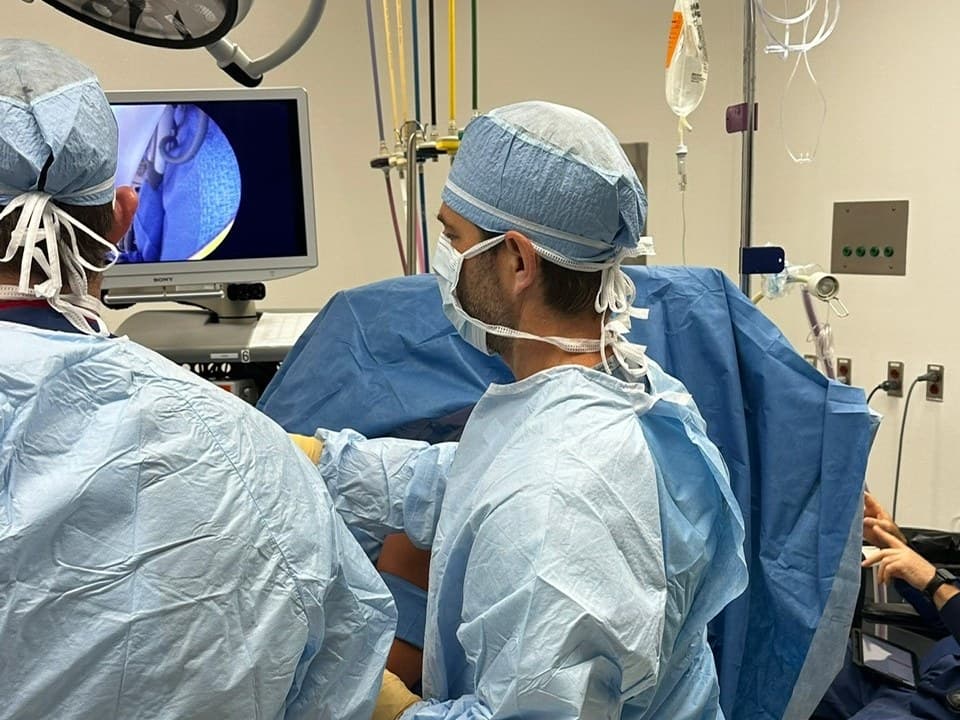
Rotator cuff surgery is an outpatient procedure. After a repair, recovery runs in stages over about six months.
If the spurs are removed before the rotator cuff is torn, recovery is much quicker: a sling for only a couple of days, exercises at home without formal physical therapy, and back at work after about a week.
A rotator cuff repair generally takes 60 to 90 minutes. Removing a bone spur without a tear takes about 30 minutes.
Not necessarily. Many patients have a nerve block with light twilight sedation instead, which markedly reduces the risks of surgery.
No. Rotator cuff surgery is an outpatient procedure.
The bandage comes off 48 hours after surgery, and then you may shower. After a repair you'll be in a sling for a month.
After a repair, regular therapy for two to four months, starting two to four days after surgery. Without a repair, most patients do their exercises at home.
At least two weeks after a repair, and several months before heavy lifting. After spur removal alone, about a week, with heavy lifting between 8 and 16 weeks.
Most normal activities at about six weeks after a repair (three weeks without a tear), apart from heavy lifting and overhead work. Sport generally takes six months after a repair, and 8 to 16 weeks after spur removal.
Your surgeon
MD
Dr. Jones is a fellowship-trained sports medicine surgeon specializing in the knee and shoulder. He has performed several thousand knee and shoulder procedures, focused on joint preservation and minimally invasive surgery.

Before your visit
Also in Shoulder
We call you back within one business day.
Request an appointmentRather talk it through?
Call (615) 329-2520